Showing posts with label phonics. Show all posts

Sunday, December 11, 2016

No Answers: A Slight Tangent From Phonics

I have always liked the phrase, "blank page," with the plosive bilabials.  Something in the way my mouth forms to shape the sounds feels as powerful as the potential that an empty Word document--or a cleanly-lined journal--feels.

But tonight I find myself tired and browsing through unpublished posts.  I came across this one from over two years ago.  Enjoy.

Oh, and forgive the aphorisms, too.

          *          *          *          *          *

I find myself sitting before a blank screen tonight.  I used to revel in the idea of a blank page--the alliteration of the "blank page" punctuates some of the plosive emotions I feel sitting in front of a blank page.

Some writers may feel the paralyzing fears of writers' block. 

Tonight, however, I am not suffering from writers' block.  I am suffering from the mundane and exhaustion of this winter.  Like the rest of the MidWest, I am trudging through this winter, getting up early to teach classes and going to a second job.  During one of my classes this past Saturday, we were talking about managing time and classwork and stress.


"What can we do to deal with stress?" I asked.  The class talked about some of the regular answers--exercise, taking breaks, talking to people, eating right, and all the rest--and we started talking about how stress can get to be too much.

"And then what?"  

One gal with bright red hair has a soft-spoken spunk I have grown to love.  "I'm going to smoke a cigarette after class."

Another gal talked about withdrawing for weeks.  Another young man talked depression.  "What do we do when we can't do what we should do?"  I was asking them more than that.  Sure, we were talking about dealing with stress at school and balancing life, but I was asking for my own answers.  What do I do when I don't have time to write?  What can I do when I can't balance my own life?  I want to write.  Students expect me to have these answers.

The class turned to me.  Someone asked what I did to deal with stress.  "I run.  I get up early."  Then I took a breath and said something like, "I don't have any answers."

And that's the thing about writing about writing.  You have to find your own answers.  No one can give the answers to you.


Sunday, November 27, 2016

If You Don't Think Language is Awesome, Listen to Pinker

I pulled out an old copy of Steven Pinker's Words and Rules recently.  Steven Pinker is a bit of a rockstar of modern linguistics, and his books on language are witty, insightful, and readable.  The introduction reads, as with all of Pinker's work, charmingly and convincingly:

"This book tries to illuminate the nature of language and mind by choosing a single phenomenon and examining it from every angle imaginable.  That phenomenon is regular and irregular verbs, the bane of every language student."

Something about the phrase, "examining it from every angle imaginable" is so true.  In language, science, and academia, we break things down and analyze aspects of a certain subjects (here, for Pinker, verbs) until we know so much about a very small subject.  More in the introduction by Pinker:

"At first glance that approach might seem to lie in the great academic tradition of knowing more and more about less and less until you know everything about nothing."

This is a great idea.  We analyze things to death.  We know "more and more about less and less until you know everything about nothing."  Something about that idea charms me especially in the study of phonics or verbs, both of which I find fascinating.

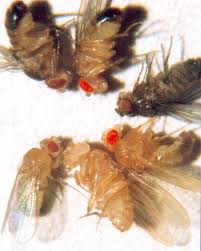
 And just a bit more from Pinker, mostly for Mike and Randy: "Seeing the world in a grain of sand is often the way of science, as when geneticists agreed to study the lowly fruit fly so that their findings might cumulate into a deep understanding that would have been impossible had each scientist started from scratch with a different organism.  Like fruit flies, regular and irregular verbs are small and easy to breed, and they contain, in an easily visible form, the machinery that powers larger phenomena in all their glorious complexity."


Words and Rules is a good read, but if you have the hankering to get into some Pinker, check out The Language Instinct.  That's my favorite of his so far.


One more thing: there's a few great videos with Pinker online, including some when he shows up on the Colbert Report.  Here's one:

Steven Pinker--The Colbert Report 2007


Monday, October 17, 2016

Post III: Just When You Thought Phonics Couldn't Be Any More Enjoyable

Funny thing about writing is that we writers take great joy in crafting amazing work.  We usually focus our efforts in the crafting of the plot and the characters, less of our strengths in the shaping of sentences, and even less of our focus in the letters and sounds.

“Do I dare 
Disturb the universe? 
In a minute there is time 
For decisions and revisions which a minute will reverse.” 
― T.S. Eliot

I remember hearing a story about T.S. Eliot.  He said something about how he wrote all day.  His friend asked him how much he wrote, and Eliot responded he wrote 5 words.  "They are good words," he said, or something like that as I remember how the story went.


We focus so much on the overall story, and so little of our attention is on the sound of the individual words.

I have written about bilabials and nasals in brief.  Here is one more marvelous pair.

Glottals--H and G.  These are two great letters, showing two cool aspects of phonetic sounds.
1) this sound is made in the back of the throat near the larynx
2) most pairings of sounds demonstrate a "voiced" and "unvoiced" version of the sound.  H and G demonstrate this well.  H is aspirated air, and G requires the "voiced" sound.

And since I'm on a T.S.Eliot trip this post, here are two more cool T.S. Eliot quotes to end:


“An election is coming. Universal peace is declared and the foxes have a sincere interest in prolonging the lives of the poultry. ” 


Monday, September 19, 2016

Fun with Phonics (Not What You Think), Part I

Alliteration and sounds are powerful.  Study the phonetic alphabet and find the fun in phonics.

This is not the fun that they lied to us about in the educational renewal programs that tried to teach us sounds.

This stuff is really fun.

Break down the sounds in the alphabet, and we can find amazing sounds and patterns.

Now linguists study and categorize sounds based on where consonants form in your mouth, or where your tongue and teeth position and the way you make a sound--from the back of your mouth, the front of your mouth, your teeth, and so on.


Let's look at bilabials briefly.  We form bilabial consonants when we put our lips together.  "B," "p," and "m" and bilabials, but I'm going to focus on b and p.

B and p are similar to each other.  The English language, and many other languages, have similar pairings that share commonalities in how we form the sounds.  B and p are not only bilabials, they are also classified as plosives because of the interruption of air flow.

What does this mean?  Say the word "plosive" carefully and out loud, and you'll get a sense of this.

B and p both carry startling and explosive sounds with their sounds and with our pronunciation.  When you say a name like "Bob Robertson" or a phrase like "a blank page" the phonetic power carries some subtle power that we may not consciously realize.

Bottom line: certainly, names have meaning, but the sounds we use to make words carry meaning, too.

More consonants next time....