Just found Grayson Taylor, and this video made me smile. Enjoy!
Showing posts with label writing rules. Show all posts
Showing posts with label writing rules. Show all posts
Tuesday, June 11, 2024
Sunday, November 27, 2022
Grammar Foundations
Maybe a couple of years ago in our fiction group, I said something about perfect tense, and Kristen asked me how I knew so much about grammar. I shrugged and said I learned a lot in graduate school.
Funny, I have thought about that brief comment and that pseudo lie in the years that have passed.
I didn’t mean to lie.
I didn’t have an answer.
Truth is, my love of grammar started long before this.
My story begins when I was in tenth grade. My family had moved to New Jersey when I was in eighth grade, and I struggled in school—but that’s not quite true, either. My older sister was a year ahead of me, and she excelled in everything without trying. I may have been smart, too, but I had different skills and different interests, so I bounced back and forth between the college prep courses that required an A to continue to the next year and the regular courses.
Funny, I would get As in the regular courses without trying which would kick me into the college prep courses. Then, I would get a B in the college preparatory course, and the system bumped back down to the regular course.
This was a typical pattern for me.
I didn’t care much for my grades. I didn’t much care to follow in my sister’s footsteps. I was a gloomy teenager without much hope. But I loved writing and words.
Freshman year I was in the regular English course. I breezed through this with an A.
Sophomore year I was in the accelerated, college preparatory course taught by Ms. Stout. She was particular about being addressed by Ms., and God planned for me to be in this class.
This was years ago. Decades ago.

We sniggered and called it the bible for Ms. Stout’s outside of class.
Ms. Stout was an intense woman with fiery blue eyes. I wouldn’t want her to know that we joked about the LAW book.
But maybe she would have laughed, too.
I think we had a list of about 30 rules outlined in the LAW book, and I think I wrote about this in an earlier blog. These 30 rules were LAWs. According to Ms. Stout, if we broke any of these laws three times in an essay, this would our grade to a C. Any subsequent infracture would drop our grade down.
So, three broken rules would bring us down to a C. Four to a D. Five to an F.
We learned quickly.
I doubt any teacher today could get away with such strict rules, but we learned the rules and how to identify them very quickly.
Most of these rules I have forgotten. The best I learned quickly.
Passive voice was perhaps the most valuable. I recall combing my essays for passive voice on the bus before school, looking for the tell-tale be-verb combinations. I found them quickly and learned to distinguish them well. Once, I questioned her passive voice question, saying it was not a verb phrase, and she agreed with me, raising my grade with a smile. She seemed pleased that I knew the difference between a passive verb phrase and what might have been an adjective phrase.
Passive voice seemed to be the most useful tool. Ironically, I use passive voice steadily in my current, medical job, and this continues to annoy me because the requirements of my job demand the passive.
The other rules were numerous but logical. The only other one I remember clearly is, Avoid “it” and “there” as a subject when they are placeholders without any specific meaning.
Other rules are less impressed on my memory but probably just as marked on my style. Not using “wise” at the end of words was another rule: “Grammar-wise, the class was very fruitful.” This sloppy contraction never seemed useful or helpful except when I needed to avoid it.
Ms. Stout was a funny woman with large blue eyes and dark black hair. That classroom in New Jersey was just a partition off a larger common walkway, and yet I remember Ms. Stout vividly talking of essays and meaning and words. Every word conveyed meaning, she had said. Make every word count and make every word effective.
I made a B in her class and ended up in the regular class the next year.
Funny, when I started in college, diagraming sentences and learning about transformational grammar, I thought of Ms. Stout. The foundations of my grammar probably started earlier, but Ms. Stout solidified some of the excitement and passion for what I learned.

Then, I read tons of Chomsky and Pinker, and I don’t know if I agree with everything that Ms. Stout taught us as a straight rule. I think I learned that grammar is communication and understanding, not just rules and formulation.
But I learned some rules and formulation to understand the expectation and parameters around us is extraordinarily good. The more we understand about language and its patterns and its deviations and its transformations the more we can communicate more effectively.
Or so we think.
Or so I have thought.
Monday, September 4, 2017
Verbs: A New Saga
Ahh, passive verbs. One of my favorite subjects.

 This is the basic, identifiable construction, but with other tenses (perfect, progressive), some of the verb constructions can be awesome and complex. Here's one just for fun:
One huge misconception about passive voice—otherwise known
as passive verbs—is that they are grammatically incorrect. This is very wrong.
Passive voice is completely correct, fine, and acceptable.
In fact, in my job, an FDA regulated and highly documented
business, passive voice is rampant.
Which is perhaps the problem. Passive voice, like any other tool, should
not be overused (ha, passive voice) but should be consciously tried and manipulated (passive voice here to keep with the structure of the sentence).
I’m going to start this discussion about passive with 3 different aspects of the definition because looking at passive verbs from different perspectives may help to gain a fuller understanding.
1. Flipping the sentence order

2. Verb construction

This year, that couple will have been married for a million years.
will (future) + have (perfect) + BEEN (be + past participle) + married (past participle)
This great sentence shows how the "be" takes the past participle for the perfect form and the "be" verb for the passive structure. Very cool, and this happens all the time.
3. The "PASSIVENESS" of the verb
This may sound a bit obvious after you understand how the object "receives" the action of the sentence and how the verb is no longer active. However, I find this an important point to mention: passive voice removes much of the action in sentences, making the sentences less powerful and more diluted. As writers, we invoke as much action and power as we can--diluting as infrequently as possible.
Of course, when we understand the potential power and use of passive voice, this tool can be used in interesting and slightly manipulative ways. More about this next time....
Sunday, July 23, 2017
Verbs: Episode 7, BE—again!
We touched on the basic reasons why the verb, “be” is
so complex. One of those reasons is that
be is the main building block for other verb tenses—one of the future tenses, the progressive tense, and the perfect tense.
But all by itself, not working with other verbs, be can be a complex verb with lots of
different meanings.
Let’s take a quick look at the conjugation.
|
PRESENT TENSE
|
PAST TENSE
|
FUTURE TENSE
|
PERFECT TENSE
|
|
I am
|
I was
|
I will be
|
I have been
|
|
You/we/they are
|
You were
|
You will be
|
You have been
|
|
He/she/it is
|
He was
|
He will be
|
He has been
|
Be takes the prize
for the most irregular verb. The verb
changes with every tense and with almost every subject. And most of the forms are not similar to the base
form “be.”
What an awesomely cool verb.
Let's take a quick look at the first level of meaning: to exist.
Basic linguistic theory breaks down English clauses into 10
patterns. The first 3 use “be”
verbs. Let’s take a quick look at them.
|
1.
SUBJECT + BE + ADJECTIVE => She is
creative. This classroom was
cold. We are old.
|
|
2.
SUBJECT + BE + NOUN => She will be a teacher. We are Christians. They are kids.
|
|
3.
SUBJECT + BE + ADVERBIAL OF TIME OR SPACE (this is a cool way to say a
preposition or adjective that can change and describes position or time)
=> She is late. We were at the
Writers’ Center in Broadripple. The
dogs were in the garage.
|
The meaning of be is generally the same in these sentences, but the use is
slightly different. All of these types
of sentences use the verb be to show
that the subjects possess a quality, but in #1, the quality is an adjective, in #2, the quality is a thing, and in #3, the quality is place or position.
Let’s look at this in a different way, and pull in some
linking verbs next time…
Sunday, July 9, 2017
Verbs: Episode 6, BE!
This verb is complicated. Native speakers even mess it up. Have you ever heard someone say
If I was rich, I wouldn’t have these problems. (See Grammar Girl for a great explanation of why this should be were not was.)
I been busy this week.
Again, I’m very Chomskian about usage—if your meaning is clear, grammar only matters in school and job interviews. Some people will always judge others based on their grammar skills, but if it wasn't grammar, they would judge on something else.
Back to the verb “be.” This verb is the most important verb in the English language, and perhaps the most misunderstood. I have heard fellow writers say that we need to cut all “be” verbs from our writing, omitting all usage of the verb “be.”
I find this humorous and misguided.
Certainly, writers generally overuse the verb. I do. On the other hand, the verb is intrinsic in our language for many important reasons:
- This is the primary verb that means to exist, to become, to live, to occur, to happen, or, of course, to be.
- This is the verb we use to build much of our future tenses. BE + going to verb = a common future usage (I am going to buy a new car next week; she is going to travel to Belize next month).
- This is the verb we use to form the progressive tense. BE + an –ing verb = a progressive verb (I am chewing my pen).
- This is the verb we use to make passive tense. BE + past participle = a passive verb (it can get way more complicated than this).
Of course, when writers talk about minimizing passive or inactive verbs and replacing them with active verbs this is ideal!
Please, please don’t talk about slashing “be” from your writing. It is the most important verb in our language. Learn to use it well--if minimally.
More on this next time….
Tuesday, June 27, 2017
Verbs: Episode 5, The Ultimate Perfectest
Quick review: perfect tense combines HAVE + A PARTICIPLE VERB.
With simple tenses, the tense is past, present, or future. With progressive tenses, the tense is ongoing during a time in the past, present, or future. The perfect tense is a weird tense in the English language--although other languages certainly have comparable tenses.
With perfect, the verb is relative to something that happened before. Look at present perfect (this is from Azar's Understanding and Using English Grammar, 4th Edition):

This excerpt from Azar is intended for ESOL speakers. Present perfect is natural for native speakers, but when we start to dissect it, it's suddenly confusing. I believe this is because we don't normally consider the time association with perfect tense.
Past perfect is essentially the same, but the event and the reference point are in the past:
With simple tenses, the tense is past, present, or future. With progressive tenses, the tense is ongoing during a time in the past, present, or future. The perfect tense is a weird tense in the English language--although other languages certainly have comparable tenses.
With perfect, the verb is relative to something that happened before. Look at present perfect (this is from Azar's Understanding and Using English Grammar, 4th Edition):

This excerpt from Azar is intended for ESOL speakers. Present perfect is natural for native speakers, but when we start to dissect it, it's suddenly confusing. I believe this is because we don't normally consider the time association with perfect tense.
Past perfect is essentially the same, but the event and the reference point are in the past:
When I moved to Mexico, I had studied Spanish for three years.
I had known Dan for ten years before I met his sister.Future, again, works the same way.
When I graduate next year, I will have gone to school for ten years.The uses of perfect do not stop with time. As writers, the better we understand the verbal tools we have, the better we use our language.
Sunday, April 30, 2017
Verbs, Episode 3: Happy Anniversary!
Thank you, Randy, for remembering our Forger anniversary!
In remembrance of such a wonderful holiday, I'm going to address an important issue: lay versus lie.
Couple of foundational things: this is really three different verbs that are quite confusing. Lie can mean to tell a falsehood, to say something untrue. Yes, it can also be a noun, but for this quick conversation, we are going to address this as the verb form, the intransitive verb--meaning this verb does not take an object.
Lie can also mean to rest or recline, as in "I lie down for a nap every Thanksgiving." This verb is also intransitive, like the other lie.
Lay, on the other hand, is transitive, meaning that it takes an object, and every time you use the verb, you need to lay something. Lay means to place something or put something.
Lie and lay are simple in meaning but easy to misuse.
But this in not only where the confusion lies. Take a look at the tenses and participles:
In remembrance of such a wonderful holiday, I'm going to address an important issue: lay versus lie.
Couple of foundational things: this is really three different verbs that are quite confusing. Lie can mean to tell a falsehood, to say something untrue. Yes, it can also be a noun, but for this quick conversation, we are going to address this as the verb form, the intransitive verb--meaning this verb does not take an object.
Lie can also mean to rest or recline, as in "I lie down for a nap every Thanksgiving." This verb is also intransitive, like the other lie.
Lay, on the other hand, is transitive, meaning that it takes an object, and every time you use the verb, you need to lay something. Lay means to place something or put something.
Lie and lay are simple in meaning but easy to misuse.
But this in not only where the confusion lies. Take a look at the tenses and participles:
|
|
Present tense
|
Past tense
|
Past participle
|
|
Lie (to fib)
|
Lie
|
Lied
|
Lied
|
|
Lie (to rest)
|
Lie
|
Lay
|
Lain
|
|
Lay (to place)
|
Lay
|
Laid
|
Laid
|
The forms of these verbs overlap. Anyone who tells you the difference between these verbs is simple is lying to you. The participles (this is a lesson for another couple of months' time) are confusing, too.
Randy lies down after he writes his blog. He lay down after he wrote that amazingest blog that made me laugh last week (The Anniversary Blog). Whenever Mike needs to deal with any of us, Mike has lain down for at least an hour. Preferably in a quiet field.
Keith lays the law down for this blog. Too bad when I first laid the law down no one listened--it was nonsensical anyway. We all have laid down the law for this blog, but the rules have simply become guidelines that none of us follow anymore.
And now, the real question is: how much has Randy really lied?
My game of grammar is up. I'm done being a grammar goofball!
Thank you, Forgers. May we live to be 100!
Monday, March 20, 2017
The Correctness Problem: Grammar for Writers
I am no Grammar Nazi.
Beginning any discussion about grammar always seems to beget a sense of rules and stipulations and crazy obedience and conformity.
That is not the way human linguistics work. I'm going to suggest that the English language is especially so.
The English language has a history of stealing from other languages. Our irregular verb tenses reflect the conquering and conquered peoples in the (relatively) short history of our language. Our vocabulary continues to expand, using roots and entire words from other cultures and languages.
 But that is the thing about languages. They don't stop changing.
In the last twenty years, the noun "text" was altered in our language, and then, almost as quickly, it became a verb. The word "kimchi" still sounds foreign, but English has adopted the letters to fit the word, just like "wasabi," "wok," "babushka," "vodka," or so many other words.
And what of correctness?
This is a strange and sticky subject. The "rules" we learn in school are haphazard and variable. For every rule we study, someone else follows an exception.
The Oxford comma: this is just one rule. I tend to go with the Oxford comma, but understandably, many people do not.
Spelling: gray is grey. Theater is theatre. Which is right?
And again, study a few pidgins or dialects, and you find that people on one side of the Mississippi "dived" and the other side "dove."
Travel a little farther away, like to Central America, and again the differences are pronounced:


Before I get too carried away (too late?), the point is to understand language and rules. Appreciate how people use words. Words are powerful, but meaning is more powerful.
Find the best and most effective way to use your words. Chances are, the better you know and appreciate the "rules," the more effectively you can use your words.
Beginning any discussion about grammar always seems to beget a sense of rules and stipulations and crazy obedience and conformity.
That is not the way human linguistics work. I'm going to suggest that the English language is especially so.
The English language has a history of stealing from other languages. Our irregular verb tenses reflect the conquering and conquered peoples in the (relatively) short history of our language. Our vocabulary continues to expand, using roots and entire words from other cultures and languages.
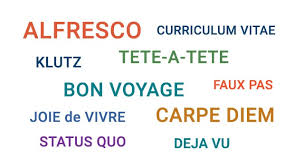 But that is the thing about languages. They don't stop changing.
In the last twenty years, the noun "text" was altered in our language, and then, almost as quickly, it became a verb. The word "kimchi" still sounds foreign, but English has adopted the letters to fit the word, just like "wasabi," "wok," "babushka," "vodka," or so many other words.
And what of correctness?
This is a strange and sticky subject. The "rules" we learn in school are haphazard and variable. For every rule we study, someone else follows an exception.
The Oxford comma: this is just one rule. I tend to go with the Oxford comma, but understandably, many people do not.
Spelling: gray is grey. Theater is theatre. Which is right?
And again, study a few pidgins or dialects, and you find that people on one side of the Mississippi "dived" and the other side "dove."
Travel a little farther away, like to Central America, and again the differences are pronounced:

Here's one more example to show how awesome and different Belizean is:

Before I get too carried away (too late?), the point is to understand language and rules. Appreciate how people use words. Words are powerful, but meaning is more powerful.
Find the best and most effective way to use your words. Chances are, the better you know and appreciate the "rules," the more effectively you can use your words.
Subscribe to:
Posts (Atom)